
“Citizenship Cards and Patrilineal Identity: A Gender Equality Challenge in Nepal” by Sanskriti Aryal
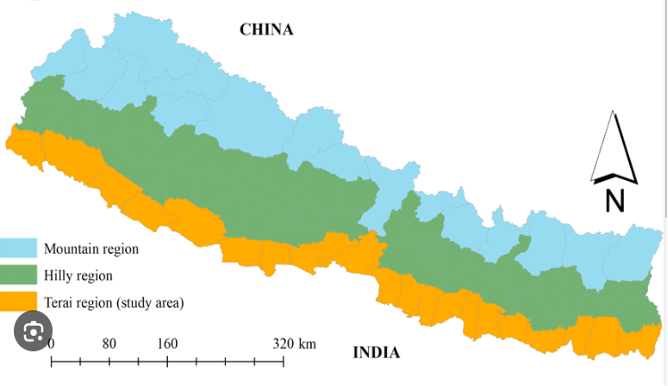
Nepal, a landlocked Himalayan nation boasts of breathtaking natural landscapes and range of imposing mountains. Against the backdrop of its striking beauty and cultural richness, the nation grapples with deep-seated gender inequality enshrined in its citizenship policies. In the heart of this debate is the citizenship card, a symbol of legal identity and belonging, which has the potential to shatter the chains of patriarchy and promote gender equality. This research paper embarks on a journey into the intricacies of Nepal's citizenship policies, unveiling the persistent chasm between what the law proclaims and how it is implemented, ultimately perpetuating a system that favors fathers over mothers.

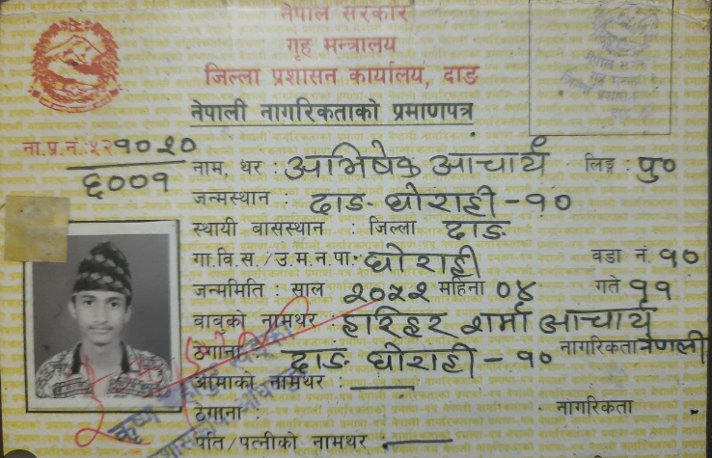
At the core of the matter lies the concept of patrilineal identity. This patrilineal identity system dictates that an individual's lineage is primarily determined by the father's name, relegating the mother's identity to a secondary or even tertiary role. (Lewis,3) Patrilineality, a cultural system of organizing family relationships along male lines of descent, has persisted across various societies due to a complex interplay of historical, social, and economic factors. (Lweis,1). This practice, rooted in the belief that family identity and property should be transmitted through the male lineage, has deep historical origins. In early human societies, male roles as hunters and warriors contributed to the emphasis on their importance in determining family lines. (Lewis,3) The transition to agrarian societies further reinforced this notion, with the passing down of property and resources becoming central to patrilineal practices. By favoring male heirs, societies aimed to ensure the continuity of family assets and secure the family's economic and social standing. This linkage between men and property was crucial, as it provided financial security, preserved wealth, and contributed to the stability of family structures.

The patrilineal system, says Jone Johnson Lewis, is characterized by the transfer of surnames, property, and social positions along the male line, especially through marriage. In such societies, sons inherit property, privileges, and social status from their fathers. Daughters, on the other hand, often inherit nothing, especially if they are expected to marry outside the family. These practices, such as primogeniture, where only the eldest son can inherit, have perpetuated the gender disparities embedded in patrilineal systems. Consequently, patrilineality has historically contributed to the reinforcement of patriarchal norms and male dominance within many cultures. This bias is particularly evident in the realm of citizenship, especially in a developing country like Nepal.
According to Grossman-Thompson, Citizenship in Nepal is a “coveted legal status” that extends beyond its bureaucratic definition. It is the key that unlocks access to education, employment, healthcare, political participation, and social services. It is the bridge between belonging and exclusion, and in Nepal, it is a bridge embedded with gender inequality. The nation's citizenship laws, while on the surface seem progressive and egalitarian, often fail in practice. Despite the legal recognition of a child's right to obtain citizenship from either parent, the system remains heavily skewed in favor of the father, effectively sidelining the mother's role in the process.
This paper emphasizes the gendered anxieties and exclusionary practices that the Nepalese citizenship system perpetuates. By doing so, it unravels the complex relationship between the legal framework, societal norms, and gender discrimination. Despite the presence of legal provisions that acknowledge equal rights for women in conferring citizenship, the system continues to uphold historical biases that are deeply embedded in the collective consciousness. For instance, in Nepal, the 2015 Constitution pledges a commitment to values of social justice, equality for all social classes, castes, genders, and ethnicities, and the protection and promotion of unity in diversity. However, these commitments “appear to be undermined” (Dhamala, 6) by the citizenship provision within the same constitution, which has a gendered element. According to the Constitution of Nepal, which is a very key source for this research essay: Specifically, Part 2, Section 11 of the Constitution outlines the criteria for Nepali citizenship. Article 5 of this section states that a person born to a Nepali citizen mother with domicile in Nepal, but whose father's citizenship is unverified, shall be conferred Nepali citizenship by descent. However, it also includes a provision that if the child's father is found to be a foreigner, the child's citizenship by descent can be converted to naturalized citizenship according to the Federal law.
Dhamala, who studies the constitution of Nepal through a gendered lens, says that the gendered aspect of this provision becomes evident when a child's citizenship request requires proof of the father's citizenship. If the father is confirmed to be a foreigner, the child is denied citizenship by descent and instead becomes eligible for naturalized citizenship. Naturalized citizenship is subject to specific laws and criteria set by the Federal government.
The laws that contribute to the gendered and, in some perspectives, patriarchal nature of this citizenship provision in the Nepali constitution include those that:
- Require the child's father's citizenship status to be known and verified, thereby placing the burden of proof on the father. This requirement can disadvantage children whose fathers are unknown or unverified citizens. (Dhamala,4)
- Allow the conversion of the child's citizenship to naturalized citizenship if the father is confirmed to be a foreigner. This can be seen as discriminatory and patriarchal because it assumes the importance of paternal lineage over maternal lineage. (Dhamala, 5)
Maintain that naturalized citizenship falls under the discretion of Federal law and is not considered a fundamental right, unlike citizenship by descent. This can be perceived as unequal treatment and reinforces a gendered hierarchy, as it suggests that citizenship through the father is of greater importance than citizenship through the mother (Dhamala 5).
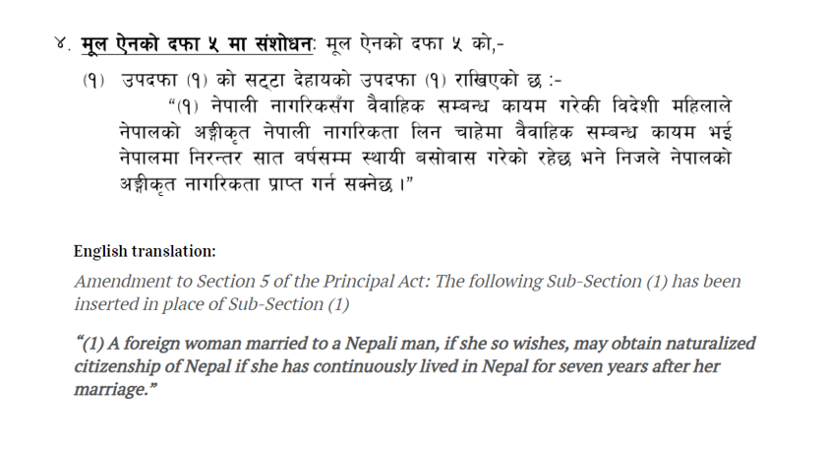
In summary, the citizenship provisions in Nepal's constitution, “while professing commitment to social justice and equality, introduce elements that can be considered patriarchal due to the preference for paternal lineage when determining a child's citizenship and the conditions that shift a child's citizenship from descent to naturalized” (Dhamala, 7). These aspects of the law perpetuate gender inequalities and discrimination within the Nepali citizenship system.
The perpetuation of discriminatory citizenship laws exacerbates existing social inequalities. It reinforces the idea that certain segments of the population are more privileged than others based on gender and patrilineal identity. According to Mona Laczo, this translates into concerns of gender disparity. She says, "Women - and men - who are without citizenship have no legal identity. "(Laczo, 81) This means that they may not be able to pursue legal suits if their rights in law are violated. This not only fosters social division but also impedes social progress and cohesion. Furthermore, according to Laczo, the denial of education to a significant portion of the population has a “long-term effect” on the nation's human capital. A lack of education can limit the potential and productivity of these children, making it difficult for them to secure skilled employment in the future. This, in turn, hinders the country's economic development and competitiveness in the global market.
In addition to education, the denial of citizenship has consequences for healthcare access. Lack of citizenship can result in limited or no access to government healthcare services. Single mothers and their children, who already face financial constraints, may be forced into seeking costly private healthcare or forgo healthcare altogether, jeopardizing their well-being. (Grossman-Thompson, 23). Single mothers, who are often marginalized and without strong support networks, may face economic hardship as they struggle to provide for their children's basic needs. The costs associated with private education and healthcare can push them into debt, leading to financial instability and exacerbating poverty in the long run. According to Lazco, this is not a pervasive issue in just Nepal. She says, the Bhutanese refugee crisis emerged in the late 1970s when the conservative Bhutanese government implemented discriminatory measures against Nepali-speakers, leading to the expulsion of over 100,000 people by 1991. This crisis stripped many, including women, of their Bhutanese citizenship, rendering them stateless. Living in refugee camps in Nepal, these women face the harsh reality of being denied citizenship, which affects their ability to claim a global identity, travel freely, secure employment, and provide for their families. Citizenship, for these displaced women, becomes a distant dream, perpetuating a sense of being 'nobodies' without recognized identities. The loss of citizenship also poses challenges for the new generation of Bhutanese refugees, complicating their understanding of national identity and duty to their country. The testimonies of these refugee women underscore the profound impact that the lack of citizenship has on their lives, perpetuating feelings of insecurity and hindering their ability to build individual identities and lives (Laczo 81).
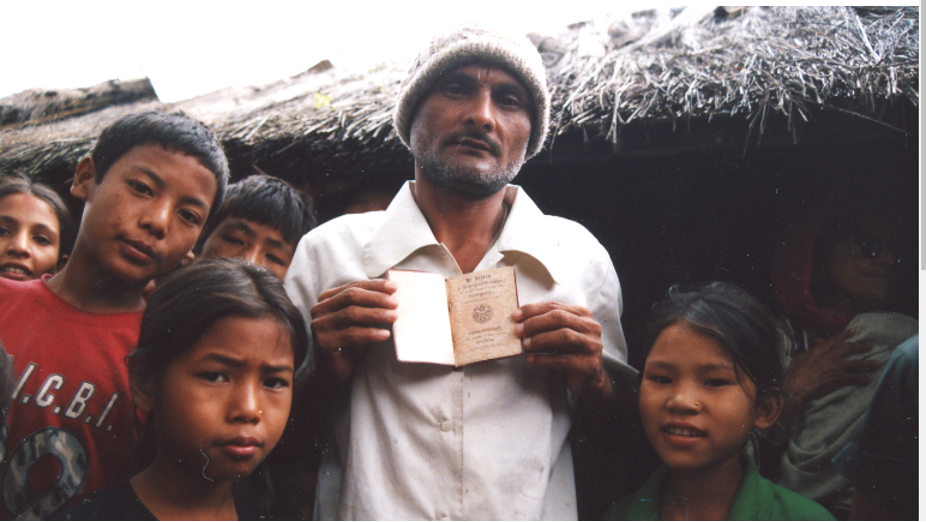
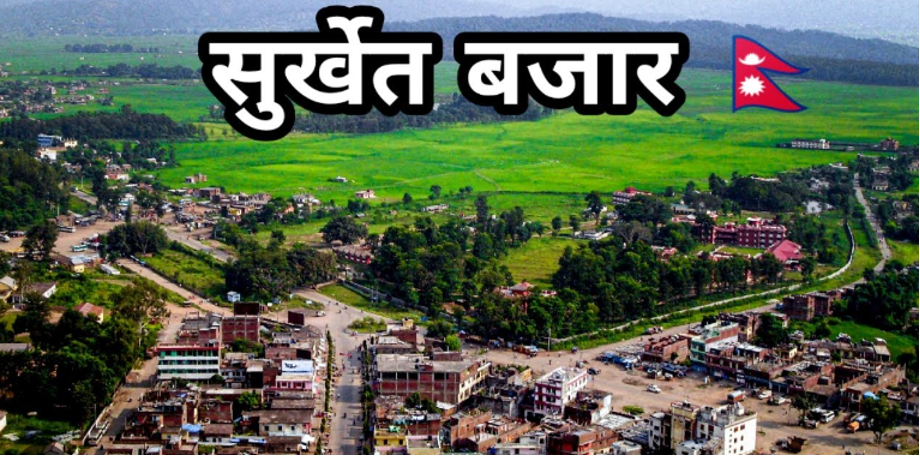
At this point, more than being just a formality, the citizenship card has become a visual representation of the patriarchy that prevails in Nepal. This piece of paper has been part of a pervasive issue where women do not het right to education or healthcare or property simply because they do not possess a piece of paper. According to Gahatraj, on The Kathmandu Post, children of absent fathers don’t even get the right to basic needs. The woman whose story he mentions in the article says,” We had been living in Surkhet for about a year when my older daughter started having health issues,’ said Budhathoki. ‘She had fractured her hand when she was little and now the old wound was giving her trouble. The doctors in Surkhet suggested we take her to Nepalgunj for surgery.’ On the day of the surgery, her husband asked her to wait at the hospital in Nepalgunj while he made arrangements for money. ‘He left us there and went out,’ Budhathoki said. ‘That was the last I saw of him. He never returned” (Gahatraj,2).
In a candid personal interview, Bindu Pandey also releals a similar heartwarming story. Having raised her two kids all by herself after a messy divorce and an abusive marriage she says, “It was humiliating to go and ask their father to make soure that my kids have an identity.” (Pandey, 2023). According to her, even after collecting the required documents and presenting them to the governmenal official, they denied to give her kids passport citing the importance of a father figure. Mizaki, a research scientist who studies citizenship in Nepal and their specific impact on women, says, “Government officials by not following the laws shamelessly propogate gender disparitry not just in households, but in the entire nation.”( Mzikazi, 2022 .)Helplessly, her last resort was to contact the person who had been absent from their life in ages. This may be the case of just once household, but this has significant impact on the gender dynamics of the entire nation.
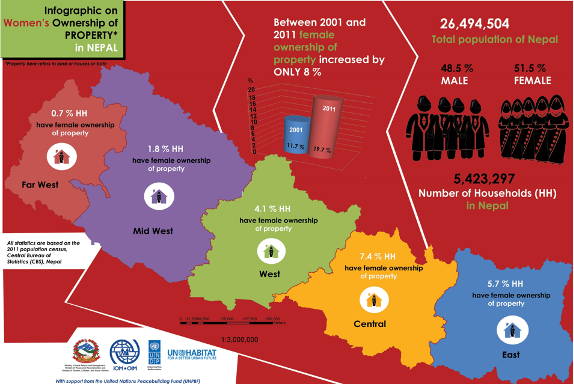
In the long term, a significant portion of the population being denied citizenship and access to basic services can lead to demographic challenges. A lack of education and healthcare can affect the health and well-being of the population, potentially resulting in higher mortality rates, increased vulnerability to diseases, and a shrinking workforce. We see in the picture that there is only about 19% land ownership in Nepal. We see similar hindrances in Education. Among 12,674 women surveyed in the 2011 Nepal DHS, we see that 5,648 women with secondary education or higher and 1 woman with unknown education, 7025 women with at most primary schooling, and 5 women with partial or complete primary schooling. This analysis shows us the disparity in access to education and property that women face in Nepal (Nepal Demographic and Health Survey, 2011).
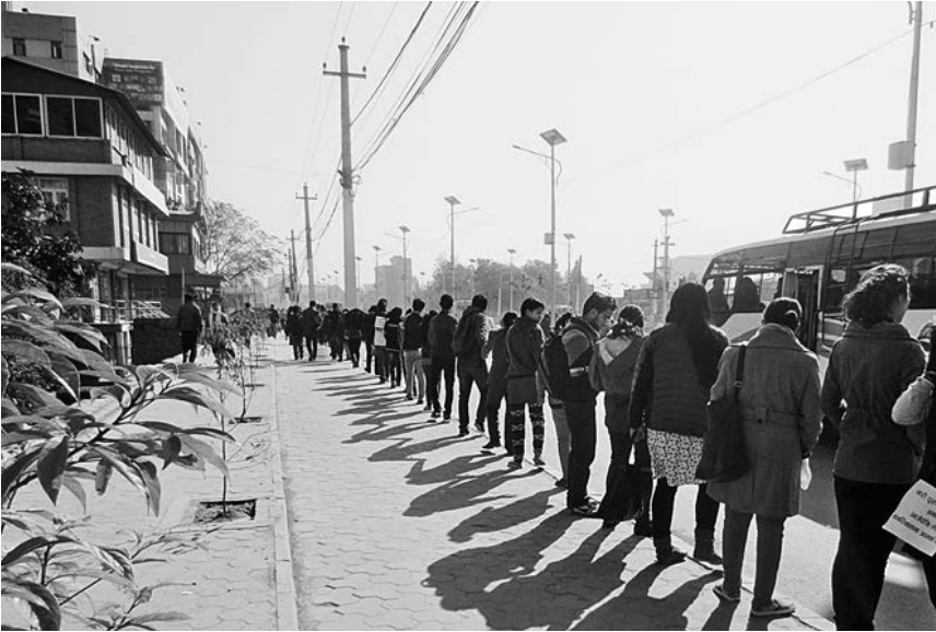
In summary, as discussed by Dhamala, the discriminatory citizenship laws against women, particularly single mothers, not only raise moral and ethical concerns but also have dire consequences for Nepal’s future. The denial of education and healthcare to a portion of its citizens not only perpetuates inequality but also hinders the country’s development and economic growth. Addressing these issues is not only a matter of social justice but is also essential for the overall well-being and prosperity of the nation. Reforms in citizenship policies can contribute to a more equitable and sustainable future for Nepal.
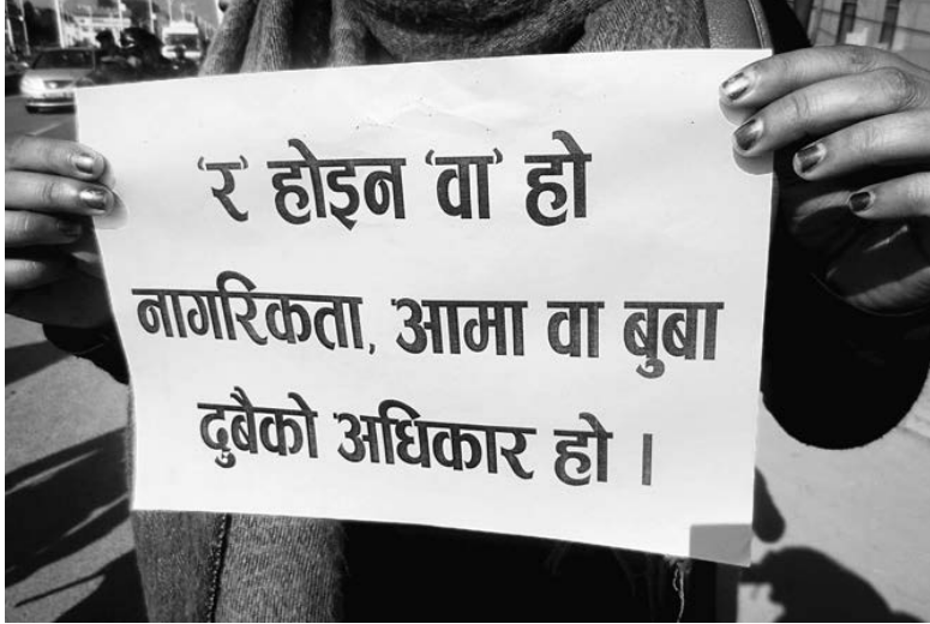
Feminist groups and civil society organizations are at the forefront of the fight for gender equality in Nepal. By challenging patrilineal norms and advocating for equal citizenship rights for women, they aim to rectify an age-old injustice that has disadvantaged women and perpetuated male dominance. Their efforts contribute to a broader movement for social justice and gender equity. Advocacy initiatives often involve lobbying for legal reforms and policy changes. (Barbara Grossman-Thompson, 813) These organizations work to influence lawmakers and policymakers, pushing for amendments to discriminatory citizenship laws. Their tireless efforts can result in changes that have a significant impact on the lives of women and their children, granting them equal access to rights and benefits.
Through awareness campaigns, education, and mobilization, feminist groups and civil society organizations empower women to assert their rights and challenge the status quo. They provide a platform for women to share their stories and experiences, amplifying their voices and highlighting the real-life consequences of discriminatory citizenship policies. These advocacy efforts also work to change societal perceptions and attitudes. By raising awareness about the negative consequences of patrilineal norms and discriminatory laws, they contribute to a shift in public opinion. Over time, this can lead to greater acceptance of gender equality and an erosion of traditional gender roles. (Barbara Grossman-Thompson,770-813)
Advocacy initiatives often foster partnerships and alliances with other like-minded organizations, both at the national and international levels. These alliances strengthen the advocacy efforts and can bring about broader changes in the legal and social landscape. International support and recognition can also apply pressure on the government to reform its policies. (Latschan,77). In a society deeply entrenched in patriarchal values, these advocacy initiatives serve as a symbol of hope and progress. They show that change is possible and that there is a growing movement dedicated to dismantling gender-based discrimination. This hope encourages individuals and communities to join the cause and contribute to a more equitable future. The impact of these advocacy efforts extends beyond Nepal's borders. The struggle for gender equality and the fight against discriminatory citizenship laws resonate with similar challenges faced by women in many parts of the world. Nepal's experiences can serve as a source of inspiration and a model for other countries seeking to address similar issues.
In conclusion, this research paper embarked on a journey into the intricacies of Nepal's citizenship policies, unveiling the persistent chasm between what the law proclaims and how it is implemented, ultimately perpetuating a system that favors fathers over mothers. The disparities and injustices woven into Nepal's citizenship laws, rooted in patrilineal norms, not only challenge the principles of gender equality but also have far-reaching consequences for the nation.
As we have explored, the impact of these discriminatory policies extends beyond the legal framework. It touches the lives of countless individuals, particularly single mothers and their children, who are caught in a paradoxical situation, relying on male relatives to secure citizenship for their offspring. Failing to do so not only denies the children access to essential services such as education and healthcare but also exacerbates the spiral of debt and poverty, with repercussions that can last for generations.
However, amid these challenges, there is a glimmer of hope. Feminist groups and civil society organizations have taken up the mantle of advocacy, working tirelessly to challenge the deeply ingrained patriarchal values and discriminatory norms that underpin these citizenship laws. Their efforts represent a beacon of change, a testament to the power of collective action and the determination to rectify age-old injustices. By promoting gender equality, pushing for legal reform, and changing societal perceptions, these initiatives offer a path towards a more equitable and just future for Nepal.
In this journey, we have not only uncovered the complexities and injustices within Nepal's citizenship policies but also highlighted the resilience and strength of individuals and organizations committed to rewriting the narrative. The struggle for equal citizenship rights is not just a legal battle; it is a movement that seeks to transform the very fabric of society, promoting inclusivity, justice, and opportunity for all. While the road ahead may be long and challenging, the commitment to a more equitable Nepal, where citizenship is truly inclusive and devoid of gender bias, is a journey worth taking, for the benefit of all its citizens, and the nation.
Citations
Dhamala, R. T. “Gender and Citizenship in the Constitution of Nepal”. Virginia Polytechnic Institute and State University, 2019, https://vtechworks.lib.vt.edu/bitstream/handle/10919/91178/Dhamala_R_T_2019.pdf?sequence. Accessed November 1, 2023
Gahatraj, Rupa." Children with absent fathers struggle for citizenship”. The Kathmandu Post, 2023. https://kathmandupost.com/province-no-5/2023/02/15/children-with-absent-fathers-struggle-for citizenship. Accessed November 1, 2023
Grossman-Thompson, Barbara, and Anne Zahliss Dennis. "Nationalism, Social Exclusion, and Gender: The Crisis of Citizenship in Nepal." Positions: Asia Critique, vol. 25, no. 4 2017, pp. 793-820. Duke University Press, https://www.researchgate.net/publication/320643453_Citizenship_in_the_Name_of_the_Mother_Nationalism_Social_Exclusion_and_Gender_in_Contemporary_Nepal. Accessed November 1, 2023.
Laczo, Mona. "Deprived of an Individual Identity: Citizenship and Women in Nepal." Gender and Development, vol. 11, no. 3, Nov. 2003, pp. 76-82. Taylor & Francis, Ltd., ttps://www.jstor.org/stable/4030563. Accessed November 1, 2023.
Latschan, Thomas. "Stateless in Nepal: How a patriarchal system denies citizenship to millions." DW, 2015, https://www.dw.com/en/stateless-in-nepal-how-a-patriarchal-system-denies-citizenship-to-millions/a-18223750. Accessed November 1, 2023.
Lewis, Jone Johnson. "Patrilineal vs. Matrilineal Succession." ThoughtCo, Feb. 2, 2021, thoughtco.com/patrilineal-vs-matrilineal-succession-3529192.
Ministry of Health and Population, New ERA and ICF International, 2012. 2011 Nepal Demographic and Health Survey: Key Findings. Kathmandu, Nepal, and Calverton, Maryland, USA: Ministry of Health and Population, New ERA and ICF International.
Nduna, Mzikazi. "Growing Up Without a Father and a Pursuit for the Right Surname." The Open Family Studies Journal, vol. 6, 2014, pp. 31-38 https://benthamopen.com/contents/pdf/TOFAMSJ/TOFAMSJ-6-31.pdf. Accessed November 1, 2023.
Pandey, Bindu. Personal Interview.3rd October 2022. Accessed November 1, 2023.